
There's a moment on the banks of the Narmada, somewhere around dawn, when the mist hasn't lifted yet and the only sound is water moving over stone. That moment is why people keep coming back to this river, year after year, generation after generation. At Pravaah, we don't call this a pilgrimage in the traditional sense — we call it a spiritual travel experience, because that's really what it is. You're not just visiting temples. You're walking, riding, or driving alongside one of India's oldest rivers, letting the landscape and the silence do most of the talking.
If you're planning your own parikrama, the first real question isn't "which route" or "how many days." It's timing. Get the season wrong and you'll spend your journey fighting heatstroke or wading through mud. Get it right, and the river practically carries you.
The short answer: October to March.
Here's why. The Narmada basin runs through central India—Madhya Pradesh, Gujarat, and parts of Maharashtra—and the climate here swings hard between seasons.
October to March (the sweet spot) Post-monsoon through winter is when the river is full, the ghats are clean, and daytime temperatures sit comfortably between 15°C and 28°C. Mornings can get chilly, especially in December and January, but that's a small price for clear skies and manageable walking conditions. Most seasoned travelers plan their start in this window, particularly right after Kartik Purnima (usually October–November), which is considered auspicious and also marks the start of peak season along the ghats.
April to June (skip it if you can) Central India turns into an oven. Temperatures regularly cross 40°C, and long stretches of the route offer little shade. Even the walking portions of the journey become genuinely risky in this heat — dehydration and sunstroke are real concerns, not just inconveniences.
July to September (the monsoon problem) The river swells, sometimes dangerously, and many of the traditional walking paths near the banks get washed out or become unsafe. Ferry crossings — a normal part of the route — get suspended when the current is too strong. This is the one season we'd actively steer people away from at Pravaah, regardless of how the journey is being done.
If you're doing a shorter, focused leg — say the stretch near Rajghat where the river famously flows north for about 6 kilometers, known locally as the Uttarvahini stretch — winter mornings are especially beautiful here, with low fog rolling off the water. It's one of the most photographed and spiritually significant stretches of the entire circuit.
The full parikrama covers both banks of the river, roughly 2,600 to 3,600 kilometers depending on the exact path taken, starting and ending at the same point — traditionally without crossing the river until you reach its origin at Amarkantak or its meeting point with the sea near Bharuch.
Here's a simplified breakdown of how the route generally unfolds:
Starting point – Most travelers begin at a ghat of their choice, commonly Amarkantak (the river's origin in Madhya Pradesh), Omkareshwar, or a ghat near their hometown along the river.
Southern bank, moving downstream – The path passes through Madhya Pradesh's forests and rural belts, then into Maharashtra's Nimar region, before reaching Gujarat and the river's mouth near the Arabian Sea at Bharuch.
Crossing to the northern bank – Once you reach the sea, you cross and begin the return leg along the northern bank, moving back upstream.
Key stops along the way – Omkareshwar (one of the twelve Jyotirlingas), Maheshwar, Mandleshwar, Bharuch, and the Parikrama Uttarvahini stretch near Rajghat and Barman Ghat, where the river's northward flow is considered especially sacred.
Ending point – Back at Amarkantak, or wherever your journey began, completing the circuit.
A quick note on the Omkareshwar circuit specifically — a lot of travelers treat this as a standalone experience, a smaller loop around the island town itself rather than the full river route. It's a good option if you want a taste of the practice without committing months to it, and it's often where people decide whether they want to attempt the complete journey later.
This is genuinely one of the biggest decisions you'll make, and there's no universally "right" answer. It depends on time, budget, and what you actually want out of the experience.
On foot This is the traditional, purest form of the journey. A full Narmada Parikrama by foot typically takes anywhere from 3 to 4 months for the complete circuit, though this varies with pace, health, and how many rest days you build in. Narmada Parikrama walking days average around 15-20 km per day for most travelers, though some cover more and others less depending on terrain and season. Most itineraries built around Narmada Parikrama walking days recommend one full rest day per week to let the body recover. Walking gives you a completely different relationship with the river — you meet local villagers, stay in ashrams and dharamshalas, and experience the landscape at a pace that lets it actually sink in. It's demanding, no question, but travelers consistently describe it as transformative.
By car For people with limited time, a Narmada Parikrama by car can be completed in roughly 15 to 25 days, hitting the major ghats and temples along both banks without the physical demands of walking. Travelers who choose Narmada Parikrama by car often combine it with short walking segments near Omkareshwar and the Uttarvahini stretch for a closer connection with the river.
By bus This is often the most budget-friendly and social option. Group bus tours usually take 20 to 30 days and move at a relaxed pace between major sites, with accommodation and meals typically bundled into organized tour packages.
At Pravaah, we run all three formats, because we've learned that the "right" way to do this journey is simply the way that actually gets you there and lets you enjoy it, not the way that looks most impressive on paper.
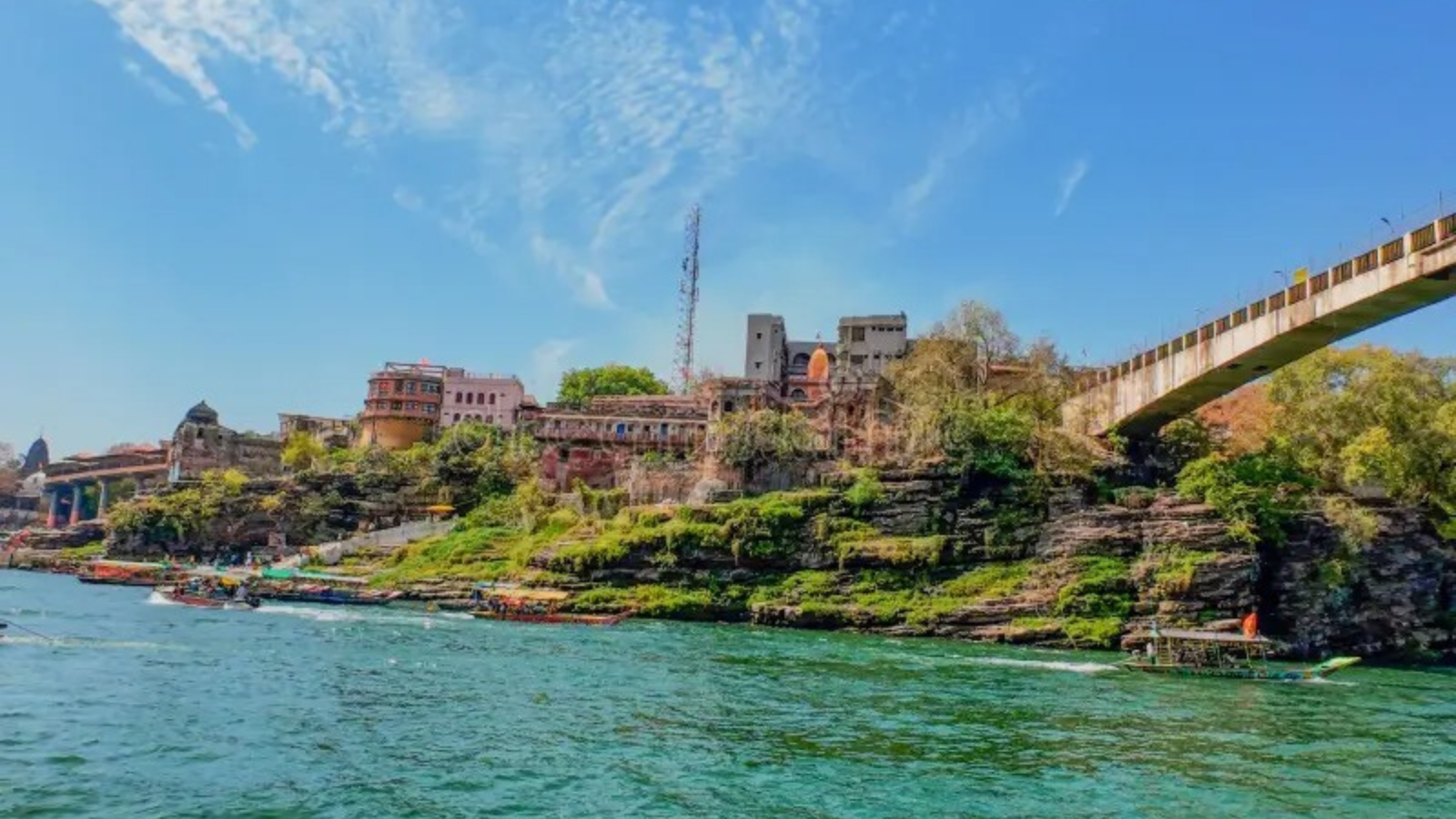
Whatever mode you choose, a few essentials stay constant. Here's what we tell every traveler heading out with us:
Clothing
Lightweight, breathable cotton clothes for daytime
A warm layer or shawl for early mornings and nights (especially October–February)
A comfortable pair of broken-in walking shoes or sandals — never new ones
A wide-brimmed hat or cap, and a light scarf for dust
Health and hygiene
A basic first-aid kit — blister care, antiseptic, pain relief, rehydration salts
Sunscreen and lip balm
A reusable water bottle with a filtration cap if you're walking
Personal medications, clearly labeled
Documents and money
ID proof (physical and digital copies)
Some cash in small denominations — many ghat-side stops don't take cards
A printed or offline copy of your route map, since network connectivity drops in several stretches
Everyday essentials
A power bank — charging points are unreliable along rural sections
A lightweight sleeping bag or bedroll if you're staying in ashrams
Basic toiletries, kept minimal
A torch or headlamp
For those walking
A daypack, not a large trekking bag, since most walking routes don't require carrying heavy gear the whole way
A walking stick, which locals along the ghats will tell you is as much about balance as tradition
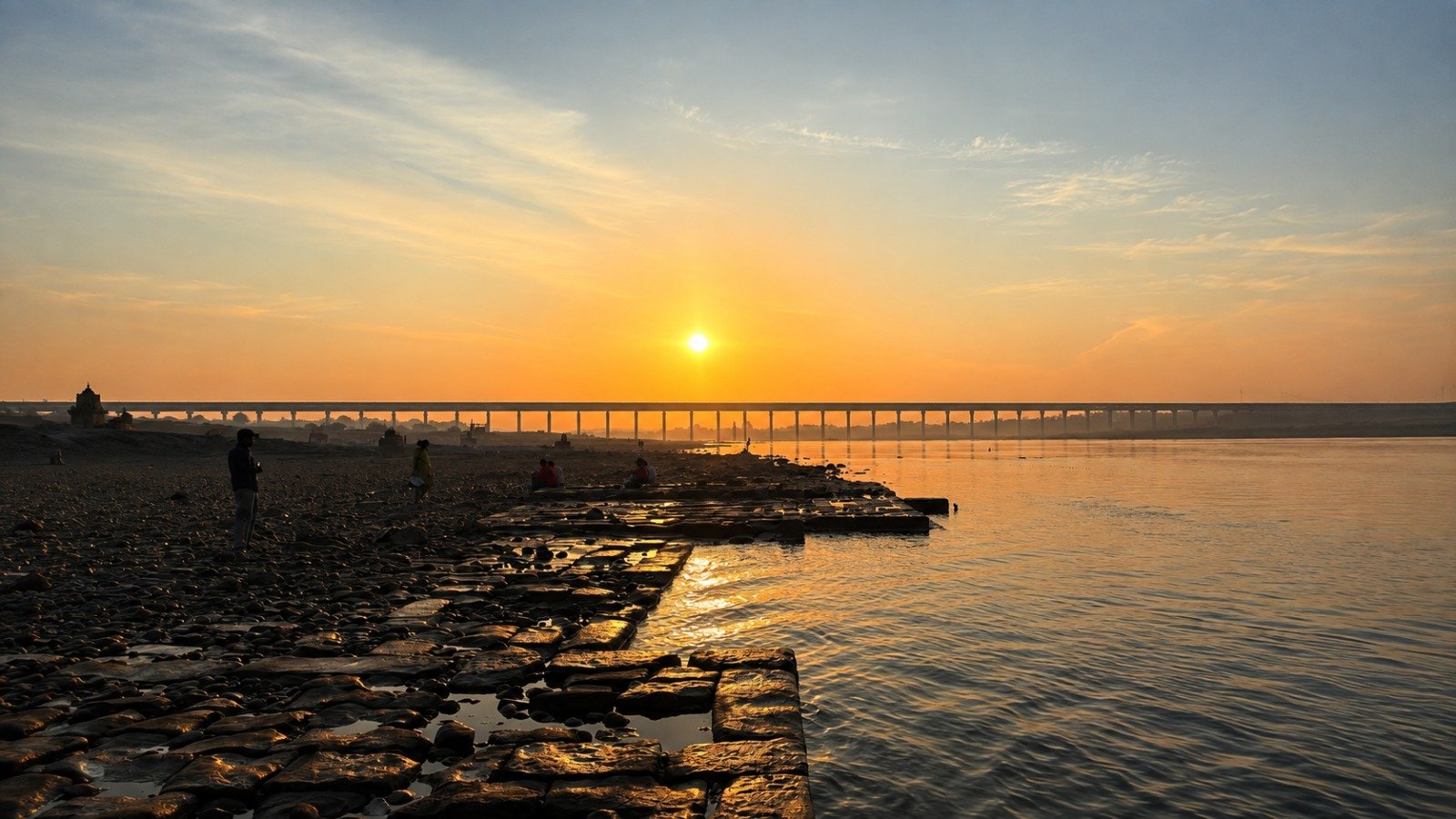
However you choose to experience it — walking the full circuit over months, or covering it in a few focused weeks by car or bus — this parikrama rewards people who plan around the river's rhythm rather than against it. Winter gives you clear skies and a full river. The route itself, from Amarkantak down to the sea and back along the northern bank, is generous with both scenery and quiet moments.
At Pravaah, we've spent years helping travelers find their own pace along this river — not rushing anyone toward a finish line, just making sure the journey itself gets the time and care it deserves.
If you'd rather not plan every stop, stay, and ferry crossing yourself, Pravaah Soul Sutra offers a fully organized Narmada Parikrama package for ₹34,999 per person, covering the major ghats, temples, and the sacred Uttarvahini stretch — with stays, meals, and guided support taken care of.
We're also currently offering an early bird discount for travelers planning ahead. Since slots and pricing for this offer are limited, it isn't listed online — call us directly to check availability and lock in your discounted rate.